Usman Salis
⬤ The S&P 500 Index (SPX) has left its equal-weighted counterpart (SPW) in the dust throughout 2025, Bloomberg data shows. The gap tells a clear story: a small group of mega-cap tech companies have been doing most of the heavy lifting. When you normalize both indices to their December 31, 2024 starting points, the SPX finished the year up nearly 15 percent while the SPW barely moved by comparison.
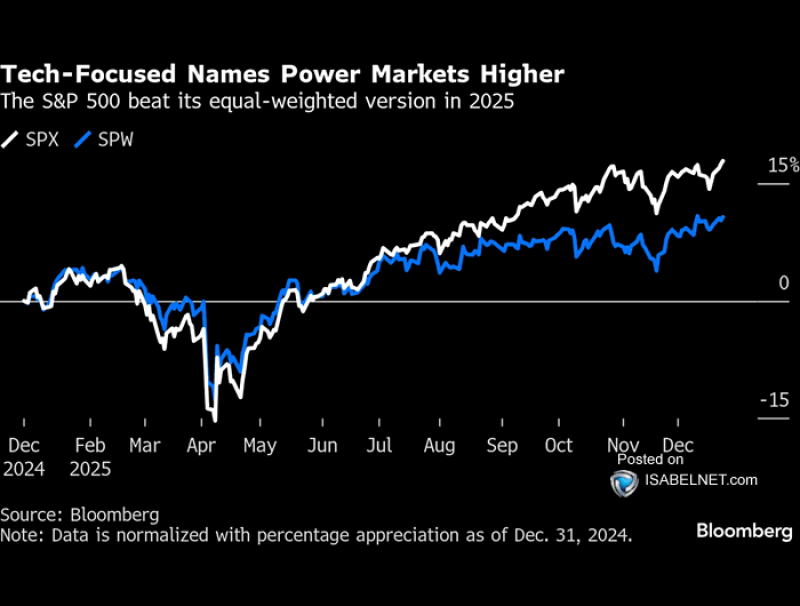
⬤ The divide between the two really opened up at certain points during the year. Both took a hit around March and April before bouncing back through the summer. But from mid-year onward, the SPX climbed more steadily, showing that big-name stocks were back in control. The SPW tried to keep pace but couldn't match that momentum, which means smaller and mid-sized companies in the index weren't pulling their weight.
⬤ This pattern shows just how much the SPX relies on a handful of tech giants. Equal-weight indices like the SPW are supposed to give you a better read on overall market health, and when it underperforms this badly, it's a sign that most companies aren't sharing in the gains. By year's end, the SPX was hitting new highs while the SPW continued to lag, painting a picture of extreme concentration at the top.
⬤ Why does this matter? Because when just a few massive companies drive the whole market, things can look great on the surface while the underlying strength is actually pretty thin. Strong returns from a limited group can prop up the headline numbers, but they also mean most sectors and stocks are being left behind. Whether the SPW starts catching up to the SPX will be a crucial signal—it'll show us if this rally is finally spreading out or if we're still betting everything on the same few dominant names.
 Usman Salis