Saad Ullah

⬤ Fresh federal budget numbers show a smaller cumulative deficit at the start of fiscal year 2026. The deficit through January sits $142 billion—or 17.0%—lower than the same October-through-January stretch in fiscal year 2025. These figures capture early fiscal-year momentum, not a full-year result.
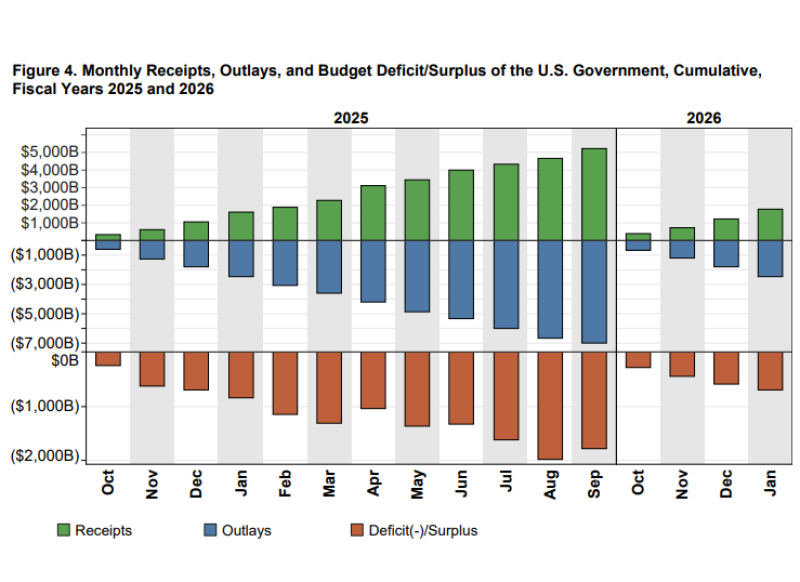
⬤ The chart compares monthly receipts, outlays, and budget balances for fiscal years 2025 and 2026. Every month still lands in the red, but the cumulative total in FY26 runs below last year's pace. That points to slower borrowing rather than a swing into surplus. Similar shifts appear in broader government deficit projections, where policy tweaks or revenue updates reshape annual deficit outlooks.
⬤ Receipts and spending both stay high, with outlays topping revenue each month. The improvement is relative—not structural. Fiscal watchers focus on how fast deficits pile up instead of absolute levels, much like tracking budget deficit trends in developed economies when gauging shifts in fiscal policy.
⬤ The data shows fiscal balances can improve year over year while staying negative overall. Early-year moderation shrinks the gap but doesn't close it, leaving questions about whether this trajectory holds through the rest of fiscal 2026 and how the broader global economy outlook evolves alongside government finances.
 Saad Ullah