Peter Smith

⬤ A Federal Reserve working paper from February 2026 is proposing something that could reshape how Bitcoin, XRP, and other digital assets are treated in derivatives markets. The Finance and Economics Discussion Series document suggests creating a dedicated risk class specifically for cryptocurrencies when calculating initial margin in uncleared OTC derivatives. The proposal names Bitcoin, XRP, Binance-related tokens, and stablecoins as prime candidates for this specialized treatment.
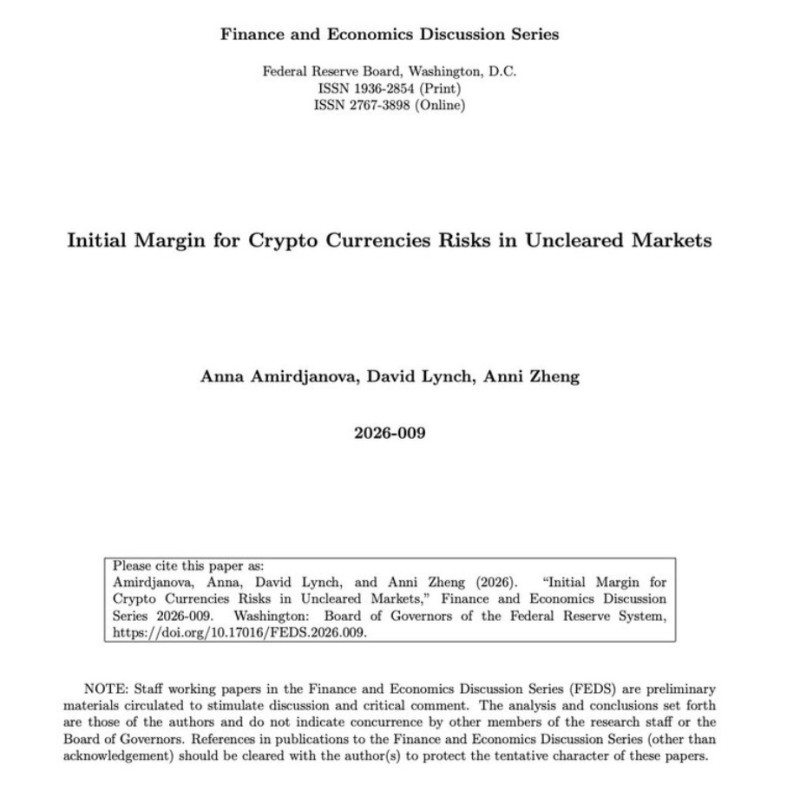
⬤ The paper, officially titled "Initial Margin for Crypto Currencies Risks in Uncleared Markets" (FEDS 2026-009), isn't a finalized rule yet—it's more of a methodological roadmap. The Fed's approach focuses on capturing crypto-specific volatility patterns rather than forcing digital assets into traditional risk buckets that don't quite fit. As the paper explains, this shift recognizes that "crypto specific volatility characteristics and risk behavior" demand their own framework instead of borrowing assumptions from stocks or bonds.
⬤ The real battleground here is the uncleared OTC derivatives market, where two parties negotiate margin requirements directly without a central clearinghouse playing referee. By carving out a crypto-specific category, the Fed is pushing toward standardized ways to measure exposure and collateral needs for BTC and XRP-linked instruments. This connects to broader regulatory moves—TheTradable has covered how the Fed is exploring payment accounts for fintech and crypto and how stablecoins are being considered as margin collateral in futures trading.
⬤ Why does this matter? Initial margin rules directly impact how expensive and practical it is to trade crypto exposure through derivatives, especially in OTC venues where institutional players operate. A clearer Fed framework for crypto classification could set the benchmark for how banks and trading desks calculate volatility and collateral standards across Bitcoin, XRP, and stablecoin products. For context on how these markets work behind the scenes, check out why traders use OTC crypto for large transactions.
 Peter Smith