Eseandre Mordi
The gold market just went through one of its wildest rides in years. After hitting record highs above $5,000 in late January, bullion crashed hard before clawing its way back up. Now traders are watching to see if the precious metal can hold this crucial price level or if more turbulence lies ahead.
Gold Recovers Half Its Losses After Wild January Swing
Gold prices climbed back toward the $5,000 mark following a chaotic period that left many traders shaken. The metal jumped 1.7% early this week, recovering about half the damage from January's sudden collapse. According to Bloomberg, dip buyers returned after what became one of the most volatile weeks precious metals have seen in recent memory.
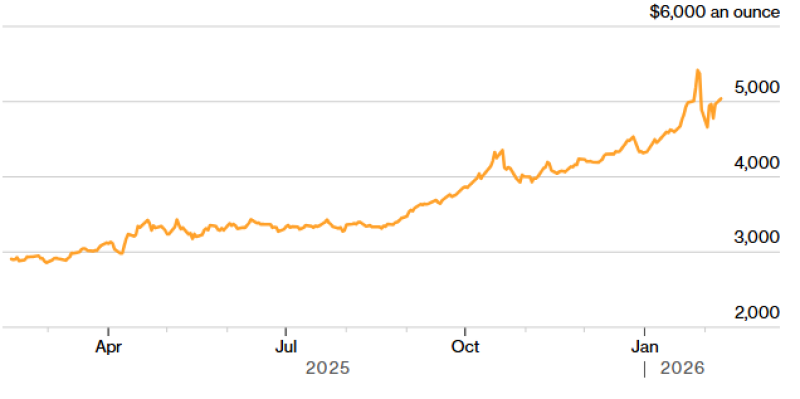
The recovery follows a dramatic reversal from the record highs reached on January 29. Charts show bullion shot above $5,000, then plunged sharply before stabilizing around the same level again. London trading had prices hovering near $4,992, suggesting the market's trying to defend this psychological barrier rather than breaking decisively higher. Despite the chaos, gold's still up more than 16% this year, proving its resilience even when conditions get messy.
Why Central Banks Keep Buying Despite the Volatility
Central bank demand continues propping up bullion, with China leading the charge. The People's Bank of China just extended its buying streak to fifteen straight months as part of its reserve diversification strategy. Chinese authorities also pushed financial institutions to cut their US Treasury holdings, which strengthens the case for gold and silver diversification.
Holding above $5,000 will determine whether this becomes a sustainable advance or just a technical bounce.
Silver moved even more dramatically, climbing toward $82 per ounce after losing over a third of its value during the selloff. This silver rebound after correction reflects the typical amplified volatility the white metal shows compared to gold.
What's Driving the Swings?
The recent chaos stems from speculative positioning and uncertainty about where monetary policy's headed. Upcoming US jobs and inflation reports could shift rate expectations and trigger more short-term movement. The fact that prices stabilized around $5,000 suggests markets are recalibrating after an extreme move, but the broader outlook for precious metals still depends heavily on policy uncertainty and how investors worldwide adjust their portfolios.
Whether gold can firmly establish itself above this level or faces another leg down remains the big question facing traders right now.
 Eseandre Mordi