Eseandre Mordi
As the automotive industry shifts toward electrification, one metal is emerging as a critical bottleneck: copper. New data reveals just how much more of this essential material electric vehicles demand compared to their gas-powered predecessors—and the gap is wider than many expected.
Why Electric Vehicles Demand More Copper
Copper intensity in passenger vehicles jumps sharply with electrification, showing why the metal is increasingly tied to the transport transition. Electric vehicles use about 2.9 times more copper than internal combustion engine cars, highlighting a clear gap in material requirements between drivetrains.
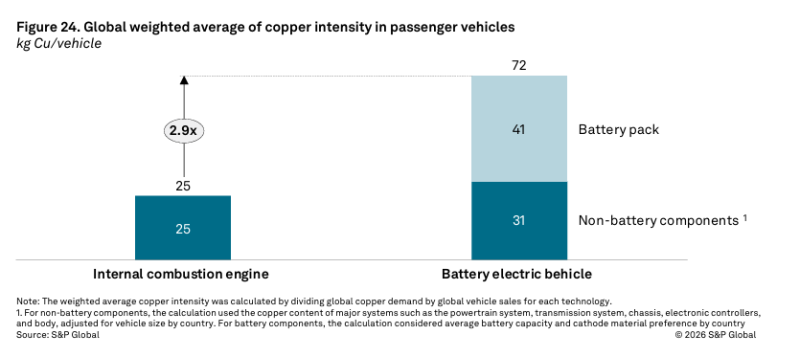
The numbers tell the story: an internal combustion passenger vehicle averages around 25 kilograms of copper, while a battery electric vehicle averages about 72 kilograms. Within EVs, the copper footprint splits between roughly 41 kilograms linked to the battery pack and around 31 kilograms in non-battery components. That non-battery share covers copper used across motors, inverters, cabling, and other electrical hardware that grows in importance as vehicles shift from mechanical to electrical complexity.
How Rising Copper Intensity Reshapes Supply Chains
The comparison is straightforward: electrification changes the copper-per-vehicle equation. Higher copper content isn't a marginal increase but a structural step-up tied to high-voltage architecture and power management needs. As EV adoption expands, the copper content embedded in each unit of vehicle production becomes a larger factor in long-term demand discussions around electrification-related supply chains. Broader demand narratives around energy transition metals have also been highlighted in Copper and Lithium Demand Set to Double by 2040.
The shift matters because copper demand is shaped not only by how many vehicles are sold but by how much copper each vehicle requires. With electrification increasing copper intensity per vehicle, the metal's consumption profile becomes more sensitive to technology mix changes across the auto market. Related supply and balance themes have been discussed in Global Copper Demand Set to Jump 50% by 2040 and U.S. Builds Largest Copper Stockpile in Decades.
 Eseandre Mordi