Eseandre Mordi
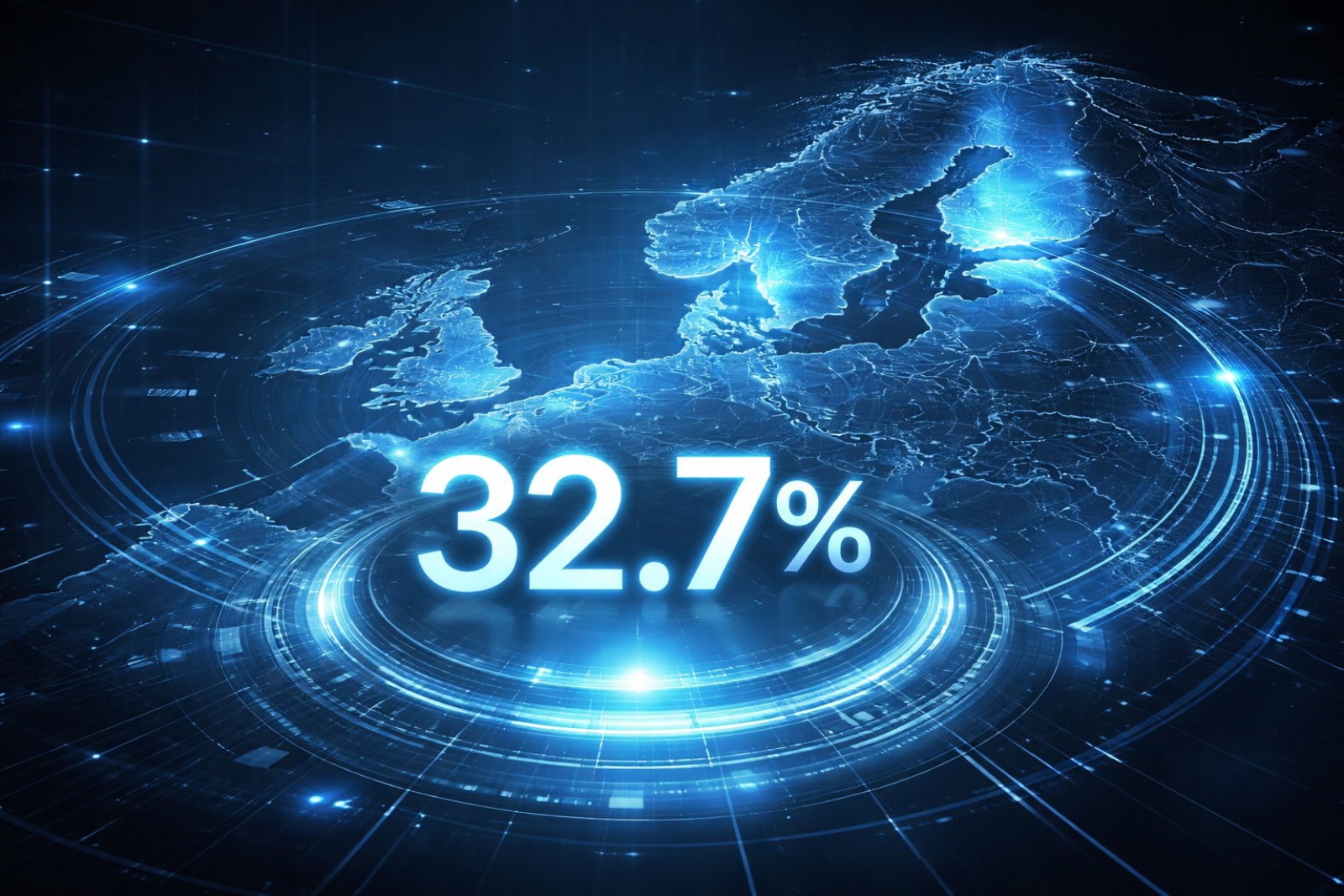
⬤ Generative AI has shifted from a specialist curiosity to an everyday item for Europeans. Eurostat states that almost one in three EU citizens aged 16-74 used a generative AI tool at least once during the last three months. The average conceals wide gaps - some regions surge forward while others barely start.
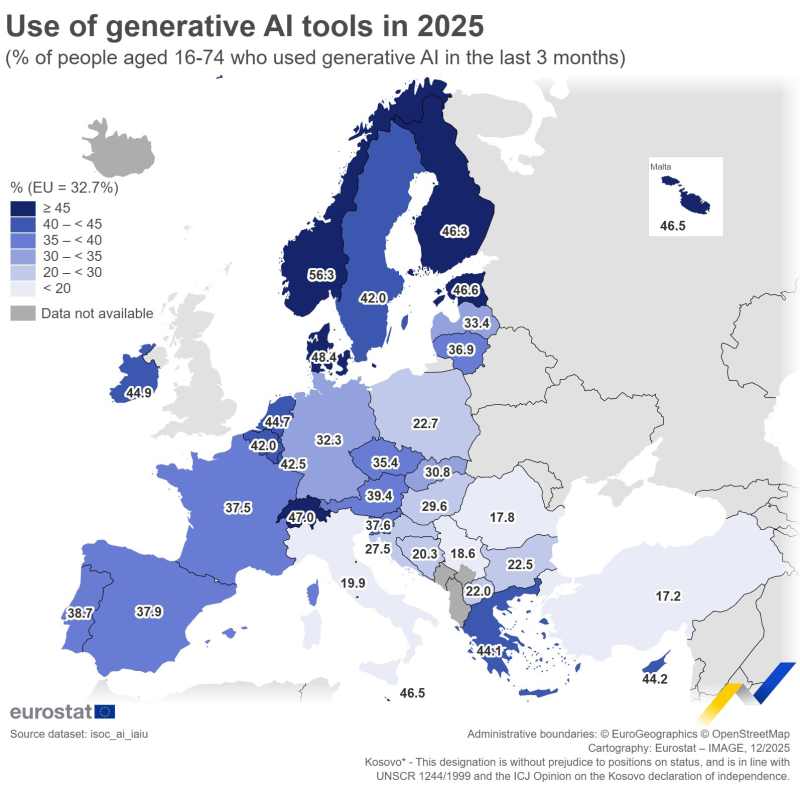
⬤ Denmark heads the list at 48.4 %, which means that nearly every second resident has already tried the technology. Estonia comes next at 46.6 %. Both countries show a wider Northern pattern - people fold AI into daily routines for work tasks, school projects or quick shortcuts. Classrooms and homes treat the software as a standard utility rather than a novelty.
Northern Europe again leads in new technology - yet the rest of the continent still needs basic digital skills and reliable networks before similar uptake is possible.
⬤ Southern and Eastern Europe lag far behind. Romania posts the lowest uptake at 17.8 %; Italy stands only slightly higher at 19.9 %. The delay reflects long standing weaknesses - patchy broadband, scarce training offers plus low public awareness. While some cities push ahead, large rural areas remain almost untouched.
⬤ The split has economic weight. Nations where AI already runs through work life harvest faster productivity gains and smoother digital transitions. Areas that lag risk widening an internal EU gap that could become hard to close. The 2025 data leave no doubt - generative AI will stay, but its benefits will reach different parts of the map at very different speeds.
 Eseandre Mordi