Marina Lyubimova
⬤ Google just announced it's buying Intersect Power for roughly $4.8 billion, securing the power infrastructure it needs to keep its AI ambitions running at full speed. The deal centers on "power-first campuses"—facilities that bundle power generation with data center development from the ground up. Owning these sites gives Google direct control over uptime, pricing, and expansion schedules, which matters when you're training cutting-edge AI models that can't afford downtime.
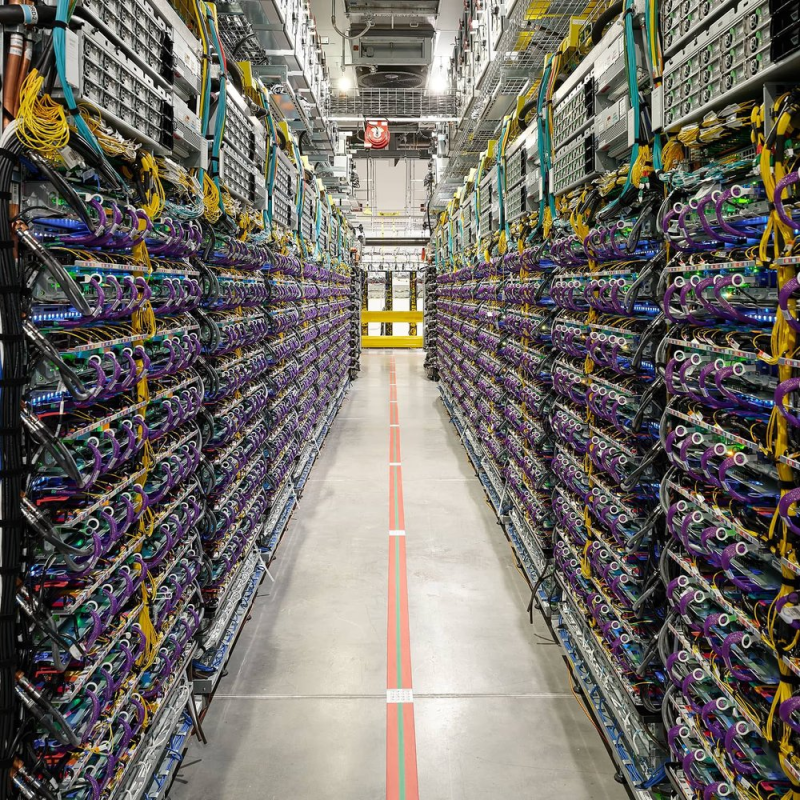
⬤ The move addresses a real bottleneck: AI workloads are energy hogs, and existing power grids can't always keep up. Training massive language models requires steady, reliable electricity—something traditional infrastructure struggles to deliver at scale.
⬤ The real advantage here isn't about squeezing out a few percentage points of efficiency. It's about speed and control. Power-first campuses let Google build out AI capacity on its own timeline instead of waiting years for regional utilities to upgrade transmission lines. As AI models get bigger and hungrier for power, access to electricity is becoming just as critical as having enough chips or data centers. This acquisition puts Google ahead in managing those constraints while competition in frontier AI heats up.

⬤ This signals that energy access is now a strategic priority in AI infrastructure—not an afterthought. Tech giants are treating power availability like a core resource for growth, reshaping how AI capacity gets built and scaled. This shift has real implications for where capital flows, how infrastructure gets developed, and who stays competitive as AI computing demand continues climbing.
 Marina Lyubimova