Alex Dudov
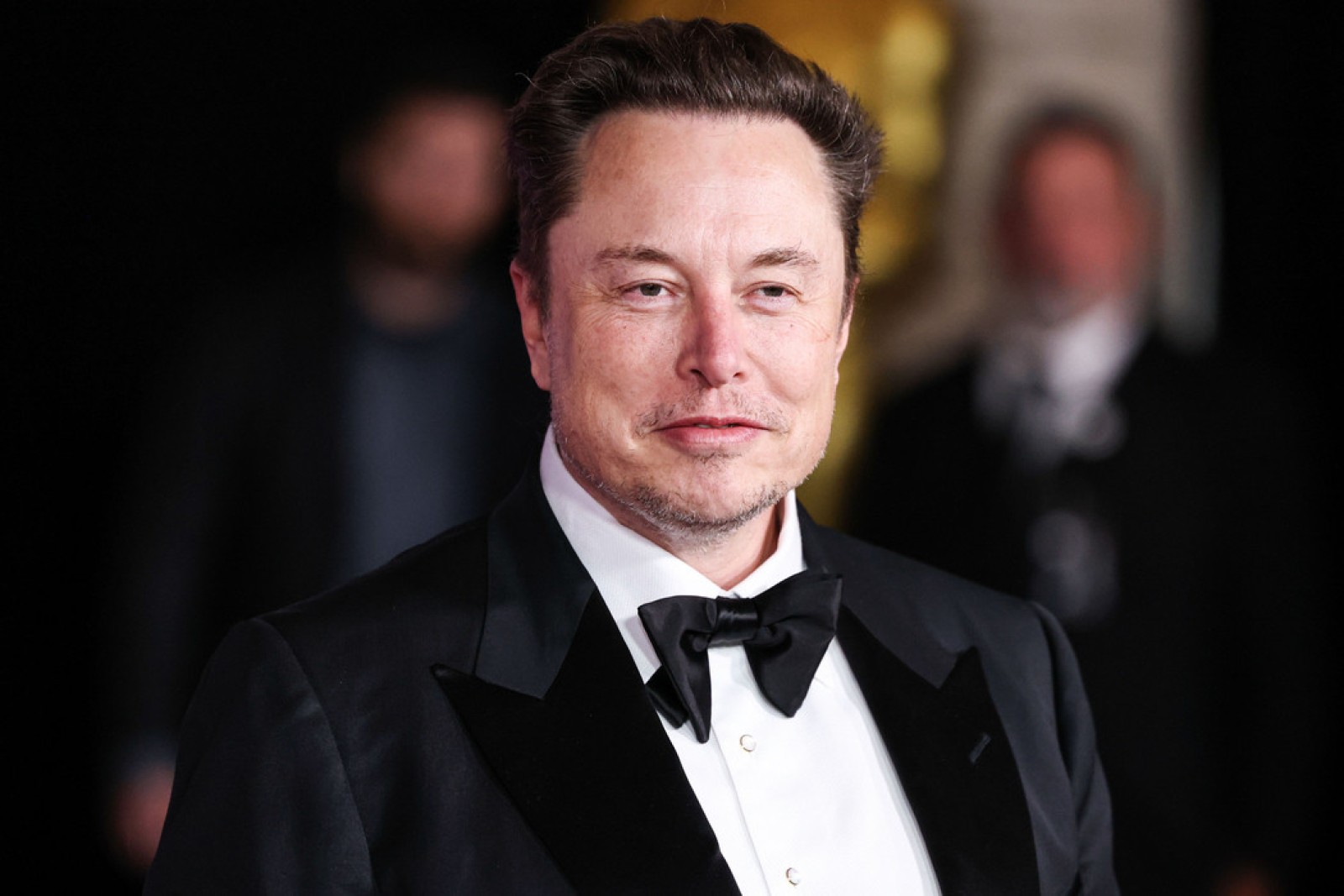
Most people who search "who is the CEO of SpaceX" are looking for a quick answer. It's Elon Musk. But if you want to understand what kind of person actually builds a private space company from scratch, bets his entire fortune on it surviving, watches it nearly collapse three times, and then turns it into an $800 billion business while simultaneously running a car company, an AI startup, and a social media platform, you need more than a name.
Who Is the CEO of SpaceX? Start With the Kid Nobody Took Seriously
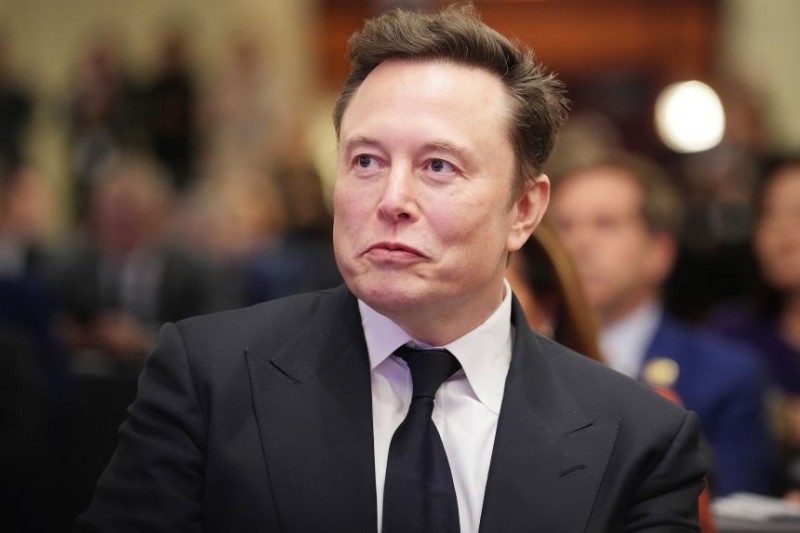
Elon Reeve Musk was born on June 28, 1971, in Pretoria, South Africa. His father was an electromechanical engineer, his mother a Canadian model and nutritionist. His parents split when he was nine. He ended up living with his father, a relationship he's described over the years as genuinely difficult.
He was a quiet, odd kid who spent most of his time buried in books or tinkering with electronics. He got bullied badly enough that at one point he ended up in the hospital after a group of boys threw him down a flight of stairs. He coped by reading everything he could get his hands on, sometimes two books a day.
At 12, he taught himself to code, built a small space-themed video game called Blastar, and sold it to a South African computer magazine for around $500. That was his first real paycheck. Not bad for a seventh grader who had just discovered he could turn ideas into money.
By 17, he was done with South Africa. He left for Canada partly to avoid compulsory military service in the apartheid-era army, and partly because he believed North America was where things actually happened. He enrolled at Queen's University in Ontario, transferred to the University of Pennsylvania, and walked away with two degrees, one in physics and one in economics. He then moved to California to start a PhD in energy physics at Stanford. He lasted exactly two days before dropping out to chase the internet boom. He later said he didn't want to sit in a lab while the world was changing outside.
First Money, First Jobs, and Learning to Build Something Real
In 1995, Musk and his brother Kimbal co-founded Zip2, a web-based software company that built online city guides and maps for newspapers. This was when most businesses still had zero web presence, so the pitch was genuinely ahead of its time.
They operated out of a small rented office, slept there to save money, shared one computer between the two of them for both coding and browsing, and lived on cheap food. Glamorous it was not. But in 1999, Compaq acquired Zip2 for $307 million in cash. Musk's personal cut came out to around $22 million. He was 27 years old.
He put $10 million of it straight into his next idea: an online financial services company called X.com, launched in 1999. X.com merged with a rival startup called Confinity, and the product that came out of that merger became PayPal. When eBay acquired PayPal in 2002 for $1.5 billion, Musk walked away with approximately $180 million.
Two clean exits before the age of 31. Most people in that position would have taken the money, bought something obscenely expensive, and spent the next few decades enjoying it.
SpaceX CEO: The Bet That Almost Broke Him
He went to Russia to buy old intercontinental ballistic missiles, thinking he could repurpose them as cheap rockets for a Mars mission he had in mind. The Russians weren't impressed by the young American with a spreadsheet and a big idea. They quoted him prices he considered absurd and didn't take him seriously.
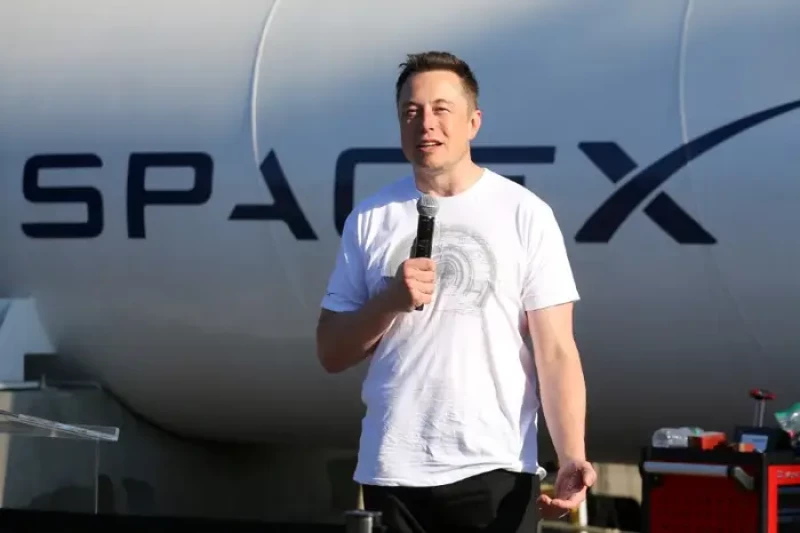
On the flight home, Musk built a spreadsheet calculating the raw material costs of building a rocket from scratch. The numbers worked. So in 2002, he founded Space Exploration Technologies Corp., which the world now knows as SpaceX, and put $100 million of his own money into it. His stated goal, which he was completely serious about, was to make humanity a multi-planetary species by establishing a colony on Mars.
Two years later, in 2004, he invested in a tiny electric car startup called Tesla Motors, joined its board as chairman, and eventually took over as CEO in 2008. He was now running two capital-intensive, high-risk, frontier technology companies simultaneously, in industries where almost everyone expected him to fail.
In 2008, things got very dark very fast. The first three Falcon 1 rockets all failed on launch. Tesla was hemorrhaging cash and sitting on the edge of bankruptcy. Musk had split his remaining personal money between the two companies. In interviews years later, he described that period as the worst of his life, not sleeping, convinced both companies were going to die, having conversations with friends where he warned them it might all fall apart.
The fourth Falcon 1 launch succeeded. NASA awarded SpaceX a $1.6 billion contract. Tesla secured an emergency investment round at the very last moment. Both companies survived. Barely.
When SpaceX's CEO Reached the Top
The recovery was slow and then suddenly it wasn't. SpaceX became the first private company to dock a spacecraft with the International Space Station. The Falcon 9 became the first orbital rocket to successfully land its booster and reuse it, which cut launch costs in ways the industry had said were impossible. Tesla's Model S launched in 2012, got named best overall car by Consumer Reports, and started changing public perception of what an electric vehicle could be.
By 2020, Tesla had become the most valuable car company on the planet. Musk's net worth crossed $100 billion that year for the first time. Then it kept going. $200 billion. $300 billion in 2021, making him the first person in human history to reach that number. The guy who had been one bad quarter away from personal ruin was now the wealthiest person alive.
As of February 2026, Forbes estimates his net worth at around $852 billion. SpaceX was valued at roughly $800 billion in a late 2025 tender offer. In November 2025, Tesla shareholders approved a new compensation package for Musk that could be worth up to $1 trillion over the next decade, tied to a series of aggressive financial and operational targets. He doesn't draw a traditional salary. His wealth comes entirely from his ownership stakes and what the market says those companies are worth on any given day.
Musk's Ideas on What It Actually Takes to Succeed
He's been asked about this enough times that some real patterns have emerged. Not motivational poster stuff. The actual principles that seem to drive how he makes decisions.
Reason from first principles, not by analogy. Most people solve problems by looking at how others solved similar problems and copying the approach. Musk strips every problem down to its fundamental physics and rebuilds the solution from scratch. That's how SpaceX drove rocket launch costs down by more than 90%.
Be willing to lose everything on what you believe in. He put his entire personal fortune on the line simultaneously funding SpaceX and Tesla when both were failing. He knew statistically he was likely to lose it all. He did it anyway because he believed the outcomes mattered enough.
Outwork everyone around you. He's openly talked about 80 to 100 hour weeks for most of his adult life. He doesn't frame this as a blueprint for everyone, but he's consistent that sheer volume of focused effort compounds in ways that talent or intelligence alone simply can't match over time.
The team is everything. He has said repeatedly that the most important decisions any company makes are hiring decisions. One brilliant, deeply motivated person in the right role beats a larger team of average performers every single time, in his view.
Work on problems that matter at civilizational scale. Energy, transportation, AI, space colonization. Musk gravitates toward challenges where getting it right has consequences for millions or billions of people. That scale of purpose, he argues, is what keeps you going when everything is going wrong.
Don't accept the consensus just because it's the consensus. Reusable rockets were declared impossible by people who built rockets for a living. Mass-market electric vehicles were dismissed as a fantasy by the car industry. He decided to find out for himself rather than take the established wisdom at face value.
So when someone asks who is the CEO of SpaceX, the honest answer is that the title doesn't quite capture it. Elon Musk is the founder, the chief engineer, the largest individual shareholder, and the person who kept the whole thing alive with his own money when it was failing. The company didn't make him. He built it, nearly lost it, and then turned it into something nobody in the industry thought was possible.
 Alex Dudov