Sergey Diakov
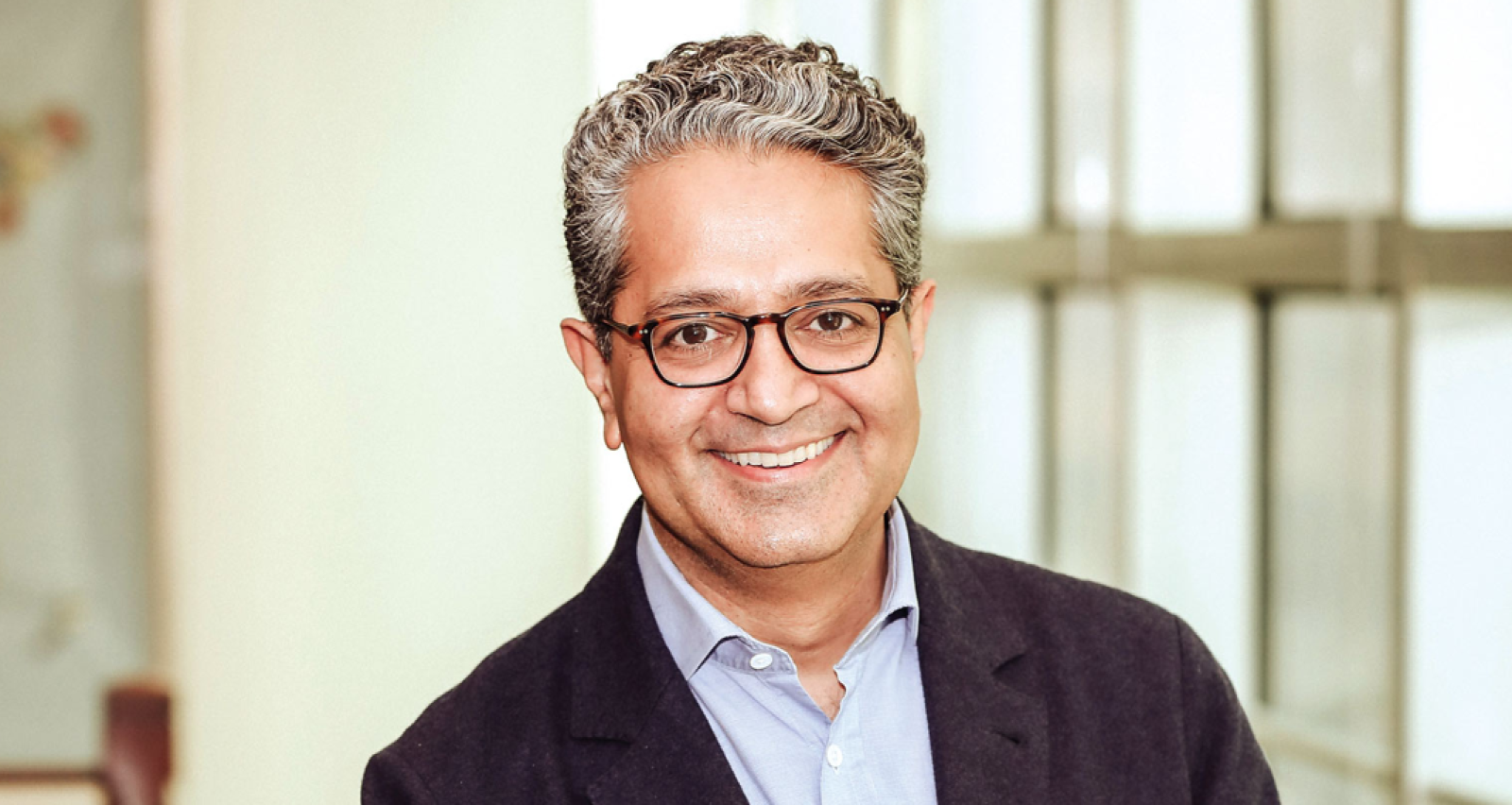
The man running one of the world's biggest investment firms didn't grow up in wealth or privilege. Salim Ramji started life in a household where saving $100 a month was a victory, where parents who never finished high school pushed their son toward education like it was oxygen. Today, he's the CEO of Vanguard, managing money for 50 million people worldwide. His story isn't about luck or connections—it's about pivoting when hockey dreams died, learning from every job, and never forgetting where you came from.
How the CEO of Vanguard Turned Hockey Dreams Into Financial Success

Salim Ramji made history in July 2024 when he took over as Vanguard's CEO. The Pennsylvania-based investment giant manages $9 trillion in assets, and Ramji became the first outsider in the company's 50-year history to lead it. But what really stands out isn't the title—it's how he got there.
Born to Tanzanian immigrants of Indian descent in Canada, Ramji grew up watching his parents struggle financially. They'd both dropped out of high school, but they had iron-clad beliefs about education being the only way out. His mother taught him about money the hard way, squirreling away whatever she could each month despite constant uncertainty. Those lessons stuck.
Like most Canadian kids, young Ramji wanted to be a professional hockey goalie. He idolized Ken Dryden, who played for the Montreal Canadiens. But when it became clear he'd never make it to the big leagues, his coach mentioned something interesting—Dryden was also a lawyer. If his hero needed a backup plan, maybe Ramji did too.
The CEO of Vanguard's Journey: First Paycheck to Partnership

After law school, Ramji had grand plans to work at the World Bank. One problem: no field experience. So he went to northern Pakistan, working in microfinance and seeing how small loans could transform entire families. That experience lit something up in him—a real interest in how money moves and who gets access to it.
His first official corporate job came in 1994 at Clifford Chance, a heavyweight law firm with offices in London and Hong Kong. The work was intense—big corporate deals, mergers worth billions, clients who expected perfection. But after a few years, Ramji realized he wanted to be making decisions, not just documenting them for other people.
In 1998, he jumped to McKinsey & Company in New York as a senior partner. There, he ran the firm's Asset & Wealth Management practice, advising major financial institutions on strategy. It was the kind of role where you're in the room when big decisions get made. He spent over a decade at McKinsey, sharpening his ability to spot trends before they became obvious to everyone else.
The pay reflected his growing clout. Senior partners at McKinsey typically pull in somewhere between $1 million and $3 million a year, with top performers earning more. For someone who grew up watching his parents count pennies, those paychecks proved what his parents had been saying all along—education and hard work actually do pay off.
Climbing to the Peak: BlackRock and the Big Leagues

In 2014, BlackRock came calling. They wanted Ramji as their Global Head of Corporate Strategy, basically asking him to help chart where the world's largest asset manager should go next. Three years later, he moved up to lead U.S. Wealth Advisory, bringing together BlackRock's famous iShares ETF platform with their traditional investment strategies.
But the big promotion came in 2019 when he became Global Head of iShares & Index Investing. Suddenly, Ramji was responsible for the bulk of BlackRock's client money—trillions of dollars in index funds and ETFs that regular people were using to save for retirement. Under his watch, millions more investors gained access to low-cost products that used to be reserved for the wealthy.
He also pushed BlackRock into newer territory. When Bitcoin ETFs became a thing in early 2024, Ramji helped launch one, showing he wasn't afraid to explore new assets when they made sense for investors.
During those BlackRock years, industry insiders estimate his compensation probably hit somewhere between $10 million and $20 million annually. That's standard for executives managing that much money. He'd reached the top tier of finance, but when Vanguard's board approached him about leading their firm, something clicked. Vanguard wasn't like other companies—it's owned by the funds themselves, which means it's essentially owned by the investors. No outside shareholders pushing for bigger profits at customer expense.
What the CEO of Vanguard Earns Today

When Ramji officially started on July 8, 2024, he became the first CEO in Vanguard's history who hadn't been mentored by founder Jack Bogle. The pressure was enormous. He was inheriting a company that millions of people trusted with their retirement savings, but one that had also been criticized for clunky technology and frustrating customer service.
Current estimates put his annual compensation around $26 million, which includes base salary, bonuses, and long-term incentives tied to how well Vanguard performs. Yeah, it's a massive number—roughly 400 times what a fresh college grad might make starting at Vanguard. But it's actually pretty typical for CEOs running firms at this scale. His net worth now sits around $20 million, accumulated over 30 years of steady career progression.
What matters more than the paycheck is what he's actually doing. In his first year, Ramji has zeroed in on fixing the stuff that frustrated customers—upgrading ancient technology systems, improving customer service, and dropping the minimum for digital investment advice from $50,000 down to just $100. That last move alone opened the door for thousands of younger investors who'd been locked out.
He's also been reviving Vanguard's active bond funds, which were part of Bogle's original vision but had gotten a bit neglected over the years. And here's where it gets interesting—even though Ramji helped create BlackRock's Bitcoin ETF, he waited over a year before letting crypto ETFs onto Vanguard's platform. And even now, they're only third-party products, not something Vanguard creates itself.
His philosophy is pretty straightforward: invest in things that generate cash flow. Stocks that pay dividends, bonds that pay interest. He's fine saying no to whatever's trendy if it doesn't fit Vanguard's mission of helping regular people build long-term wealth.
Ramji's Principles: How to Build Lasting Success

Throughout his career, Ramji has dropped breadcrumbs about how he thinks—in interviews, on podcasts, and just in how he's operated. Here's what stands out:
- Education isn't optional. His parents drilled this into him. They never got to finish school themselves, but they knew that knowledge was something nobody could take away. Ramji loaded up on degrees—University of Toronto, Cambridge, plus becoming a CFA charterholder. That education didn't guarantee success, but it sure opened a lot of doors.
- Find people who'll tell you you're wrong. Ramji actively looks for disagreement, which sounds weird but makes sense. He grew up in a family that debated everything at dinner—he literally became Canada's first World Student Debate Champion. He learned that the best ideas are the ones that survive people poking holes in them. At both BlackRock and Vanguard, he's built teams where people feel safe pushing back.
- Start saving small, stay consistent. Watching his mom save $100 at a time, month after month, taught him something crucial—building wealth isn't about hitting it big once. It's about doing the boring, smart thing over and over. That mindset now shapes how he talks about Vanguard's mission: helping ordinary people save consistently through low-cost index funds, not chasing hot tips.
- Be willing to reinvent yourself. When hockey didn't pan out, Ramji switched to law. When law felt limiting, he moved to consulting. When that led to bigger roles in finance, he went all in. His career shows that being adaptable beats being perfect. Stay curious, keep learning, and don't get stuck thinking you have to be one thing forever.
- Make investing simple and cheap. From his days at McKinsey through BlackRock and now at Vanguard, Ramji's been obsessed with democratizing finance. Lower fees, simpler products, better access for people who historically got shut out. It connects back to those microfinance projects in Pakistan and his mother's modest savings—everyone deserves a fair shot at building security.
- Complexity usually means expensive. In a recent interview, Ramji called out the financial industry for making things complicated as an excuse to charge more. At Vanguard, he's pushing simplicity—help people invest without drowning them in jargon or exotic products they don't actually need.
The through-line in all of this is long-term thinking. Ramji keeps asking the same question: does this actually help investors succeed over decades, not just quarters? For someone who started out working summers in his dad's grocery store, watching customers and learning about people, that focus on serving others over maximizing quick profits feels like the whole point.
Whether he's talking about technology upgrades, making advice more accessible, or why Vanguard won't jump on every new trend, it comes back to that. The CEO of Vanguard is running a $9 trillion operation, but he hasn't forgotten what his mother taught him about putting away that $100 each month, or what his parents sacrificed so he could get an education they never had. That's probably the immigrant dream realized—not just success, but success that makes things better for millions of people you'll never meet.
 Sergey Diakov