Eseandre Mordi
While Nvidia's stock price remains stable near $185, a surprising disconnect has emerged between the chip giant's market presence and actual institutional ownership. According to fresh Morgan Stanley data, NVDA sits at the top of the under-ownership list among megacap technology names, creating a positioning puzzle that could reshape sector dynamics.
Morgan Stanley Flags Nvidia's 2.57% Ownership Shortfall
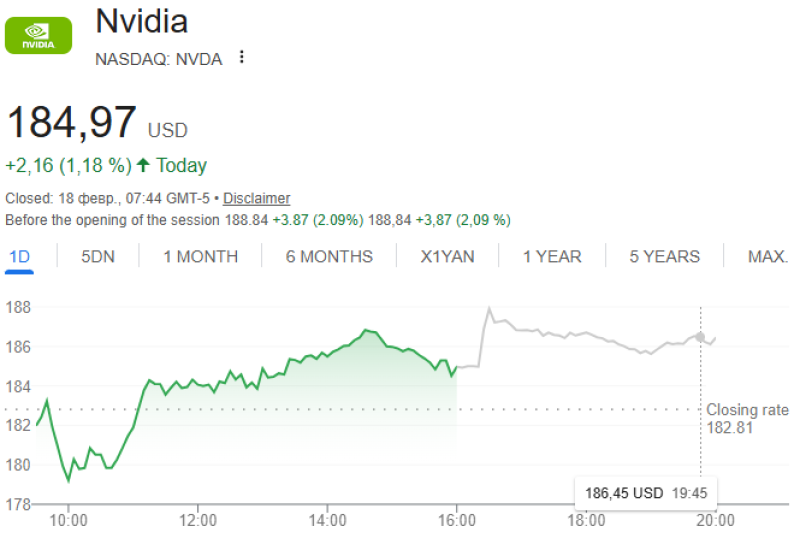
Nvidia shares moved around $184.97 in recent trading, ticking up roughly 1.18% while holding a tight range. The stock dipped from pre-market levels near $188.84 before closing around $182.81. But the real story isn't in the daily price action - it's in what Morgan Stanley just uncovered about who actually owns the stock.
The bank's analysis shows NVDA carries a negative 2.57% gap between its S&P 500 weighting and where active funds are actually positioned. That's the biggest shortfall among the megacap tech crew. Apple trails with a negative 2.16% gap, Microsoft sits at negative 2.13%, and Amazon shows negative 1.37%.
Megacap technology overall has a negative 155 basis point ownership gap versus the index, the widest in roughly 17 years, Morgan Stanley noted in the report.
The numbers tell a clear story - institutional money managers are dramatically underweight the very stocks dominating index returns. For Nvidia, that positioning mismatch stands out even more given its central role powering AI infrastructure. Earlier technical analysis showed NVDA testing key resistance near $184, adding another layer to the current setup.
AI Hardware Favored While Software Names Lag
Morgan Stanley's research also highlighted a tilt within tech positioning. Fund managers are leaning toward AI hardware plays while keeping software exposure comparatively light. That creates an interesting dynamic for Nvidia - despite being the poster child for AI chips, it's still trading with an allocation discount relative to benchmark weight.
The 155 basis point gap across megacap tech marks the widest spread in nearly two decades. When positioning strays this far from index composition, it often signals potential rotation or rebalancing flows ahead. Previous coverage noted NVDA consolidating near $189 in a bullish setup, suggesting technical and fundamental factors may align.
The combination of steady trading near $185 and this significant allocation gap creates a unique situation. If portfolios start drifting back toward benchmark weights, the impact on megacap technology leadership and sector sentiment could be substantial. Some analysts are already watching whether NVDA eyes $200 as the next major target as positioning and price action converge.
 Eseandre Mordi