Marina Lyubimova
⬤ The labor market is showing clear signs of weakness as more Americans find themselves stuck in part-time positions when they'd rather be working full-time. Recent employment data reveals a worrying trend: workers who want full-time jobs but can't get them because their hours have been cut or full-time positions simply aren't available.
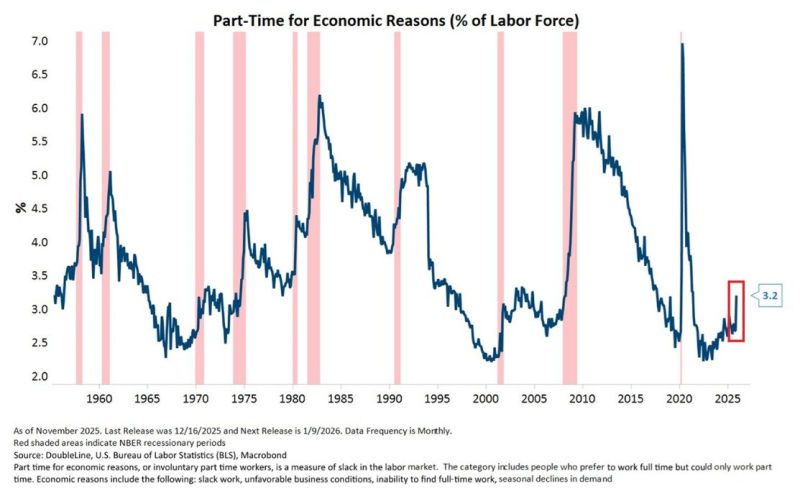
⬤ The numbers tell a stark story. Between October and November alone, 909,000 more people ended up working part-time for economic reasons, pushing the total to 5.5 million workers. That's the highest we've seen since March 2021. Looking at the bigger picture, this group now makes up 3.2 percent of America's entire workforce. History shows us that when this number climbs, it's usually a red flag that the economy is under pressure – often revealing problems that don't show up in the basic unemployment statistics.
The recent increase is not a routine fluctuation but one that has previously coincided with broader economic slowdowns.
⬤ Since June 2022, we've watched this figure jump by about 1.9 million people – that's a 51 percent increase in just over two years. What's particularly concerning is where we stand compared to past economic troubles. Right now, the share of involuntary part-time workers matches what we saw when the 2008 financial crisis was just getting started, and it's actually higher than the peak during the 2001 recession.

⬤ Because rising involuntary part-time work typically shows up before actual job losses hit the unemployment headlines. When more people are forced into part-time positions, they earn less, spend less, and the whole economy starts to lose steam. With this key metric hovering near levels we've only seen during previous downturns, expect investors and policymakers to be watching the next employment reports very closely – especially as pressure mounts for the Fed to make moves that could help stabilize the job market.
 Marina Lyubimova