Marina Lyubimova

⬤ The euro area posted 0.3% GDP growth in Q3 2025, with the annual rate reaching 1.4%. While the overall picture looks decent, the quarterly results tell a story of major differences across EU countries. Denmark led the pack with growth above 2%, while Luxembourg and Sweden came in just over 1%.
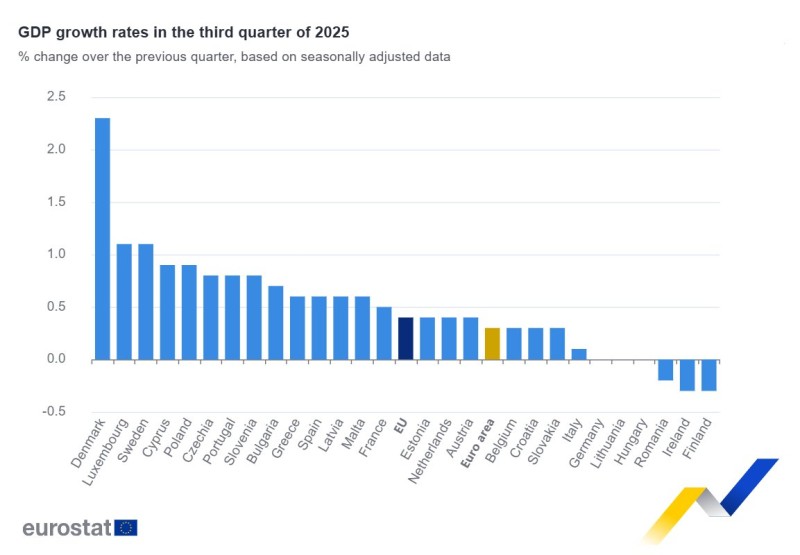
⬤ Several economies showed solid momentum in the middle range. Cyprus, Poland, Czechia, Portugal and Slovenia all grew between 0.7% and 0.9%. Spain, Greece, Latvia and Malta recorded increases around 0.5% to 0.6%. France, Estonia and the Netherlands stayed close to the bloc's average, while Austria and Belgium posted smaller but still positive gains.
⬤ The bottom tier showed stagnation or outright declines. Slovakia and Italy barely moved, while Germany actually contracted slightly. Finland, Ireland, Romania and Hungary all slipped backward, with drops between 0.1% and 0.4%. This split highlights uneven conditions across the region—some northern and central European economies are picking up speed while others struggle with deeper structural issues.
⬤ These mixed GDP results matter because euro area performance shapes expectations around monetary policy and market sentiment. The broad resilience is encouraging, but the persistent gaps suggest challenges that could influence economic trends in upcoming quarters.
 Marina Lyubimova