Usman Salis
⬤ XRP is back at the center of market discussion after reports that the U.S. Securities and Exchange Commission now treats it as a "digital commodity." The classification puts XRP in the same category as Bitcoin and Ethereum, grouping it with assets whose value comes from blockchain functionality and supply-demand dynamics, not ownership rights or profit expectations.
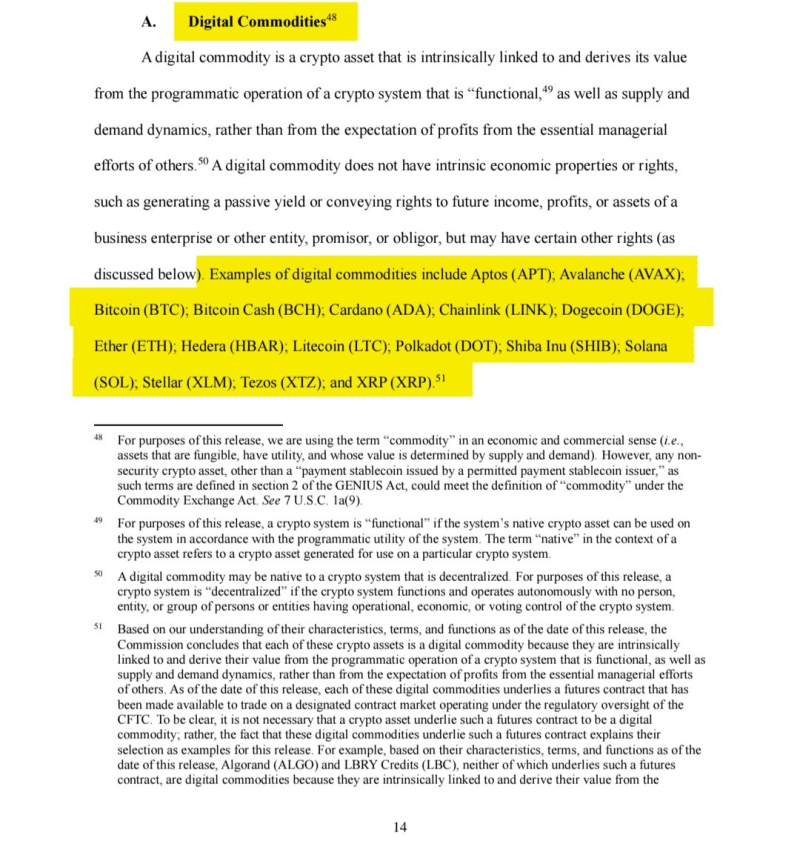
⬤ The referenced SEC document defines digital commodities as assets deriving value from the programmatic operation of a functional crypto system, with no claim to future income or profits. XRP is listed alongside Bitcoin, Ether, Solana, and Cardano, placing it firmly among recognized non-security assets. This signals a growing shift toward frameworks that separate utility-based crypto from traditional securities, a distinction that carries real weight for XRP's legal and market standing.
⬤ The timing matters. Regulatory clarity has been one of crypto's defining themes heading into 2026, and XRP has historically moved sharply on policy signals and legal developments. The SEC and CFTC's growing interest in onshore crypto products adds further weight to the commodity framing, as it opens the door to a wider range of regulated instruments tied to XRP.
⬤ Beyond regulation, XRP's role in global payment infrastructure continues to grow. Positioning it as a strategic asset in the new global settlement system reinforces its long-term relevance. If digital asset legislation advances with a commodity framework for XRP, the effects on liquidity, product availability, and market access could be significant for the broader crypto ecosystem.
 Usman Salis