Peter Smith

After months of grinding lower, XRP may be showing its first real signs of life. The token just staged a meaningful bounce off the $1.30–$1.35 area — a zone that has carried historical weight — and the nature of that bounce is turning heads among technical traders.
$1.30–$1.35 Demand Zone Absorbs Sell Pressure
XRP tested the $1.30–$1.35 region multiple times without managing to break below it, and that persistence matters. The chart shows a prolonged macro downtrend — a familiar sequence of lower highs — before price entered a consolidation phase and eventually rejected from this key support level. The repeated defense of the zone suggests sellers are starting to run out of steam.
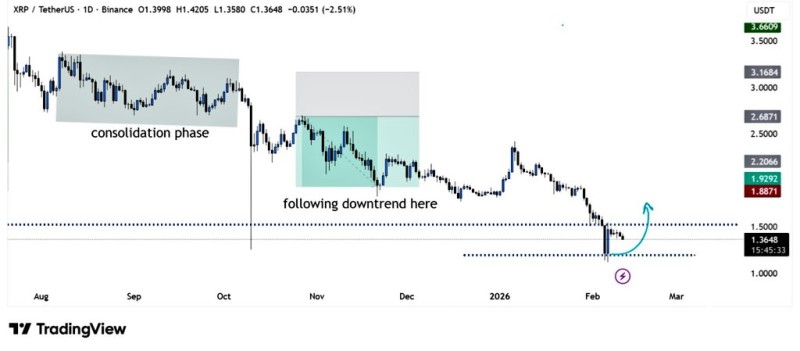
The bounce itself carries the hallmarks of genuine demand stepping in: rejection wicks on the candles, stabilization above the zone, and a noticeable slowdown in bearish momentum. That's a different look compared to the steady deterioration XRP showed in earlier months.
Structure Repair or Confirmed Reversal? What the Chart Is Actually Saying
This kind of price behavior fits a well-known pattern. Similar compression setups in prior XRP ranges have shown that tight consolidation tends to precede directional expansion — volatility contracts, then resolves into a trend move. Right now, XRP appears to be in that compression phase.
The key distinction here is that this isn't yet a confirmed reversal. XRP technically remains in a broader downtrend. What has changed is the short-term read: breakdown risk has shifted to something closer to a balance phase. That's not the same as a bull signal, but it's meaningfully different from the persistent selling pressure seen over previous months.
From a market psychology standpoint, a major support level holding after an extended decline signals that equilibrium is returning. Supply is being absorbed. If the $1.30–$1.35 zone continues to hold, the narrative shifts from distribution toward accumulation. If it gives way, the downside structure resumes. Either way, as seen in previous XRP volatility setups, the resolution from this kind of range tends to be decisive.
 Peter Smith