Usman Salis

⬤ Binance says its sanctions-related exposure dropped 96.8% between January 2024 and July 2025. The exchange linked the decline to stronger internal controls and improved risk management. The data tracks total exposure to the sanctions category as a percentage of exchange volumes, with a clear downward regression trendline running through the entire period.
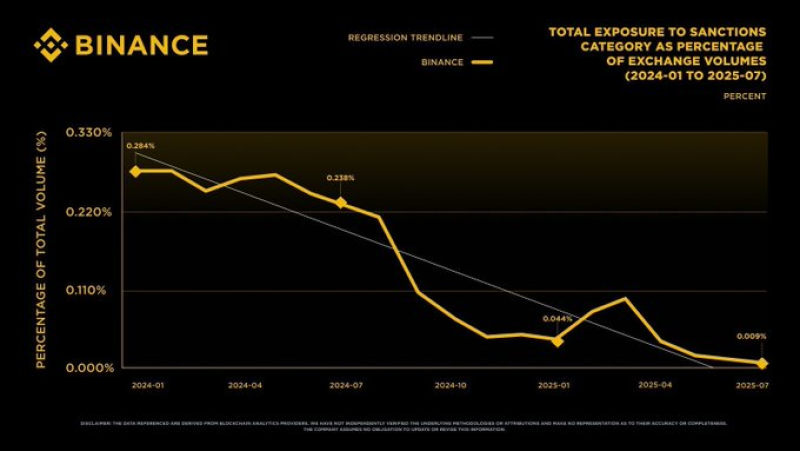
⬤ At the start of 2024, exposure sat at roughly 0.284% of total volume. It stayed elevated through the first half of the year before starting to ease, with a labeled point around mid-2024 still showing approximately 0.238%. The slide became more pronounced heading into late 2024, and by January 2025 the chart highlights a reading near 0.044% - making clear this was a sustained contraction, not a brief dip. For anyone tracking crypto compliance trends heading into 2026, that kind of multi-month compression is exactly the type of data that matters.
Sanctions-category exposure, measured as a share of exchange volumes, steadily declined from early 2024 levels to a materially lower reading by mid-2025.
⬤ The compression continued into mid-2025. By July, the figure had fallen to roughly 0.009% - effectively approaching the bottom of the plotted range. Binance framed the shift as a risk-management outcome driven by tighter controls and enhanced monitoring, rather than a one-time event. The consistency of the downtrend across multiple reporting intervals supports that reading.
⬤ Sanctions screening has become one of the more closely watched operational metrics for major crypto venues, especially as regulatory scrutiny increases across jurisdictions. The persistent downtrend across 2024 and into 2025 fits the broader pattern of exchanges across Europe and globally strengthening oversight frameworks to maintain access to international markets. For Binance specifically, the numbers add weight to its argument that compliance infrastructure has meaningfully improved over the past 18 months.
 Usman Salis