Saad Ullah

⬤ The US goods trade deficit saw a major improvement in September, falling by $6.5 billion or 11% to reach $52.8 billion—the smallest deficit since June 2020. The improvement came from a 3% jump in US exports, which climbed by $8.4 billion to $289.3 billion, marking the second-highest export level in US history. Gold and pharmaceuticals led the export growth, showing strong demand in these sectors.
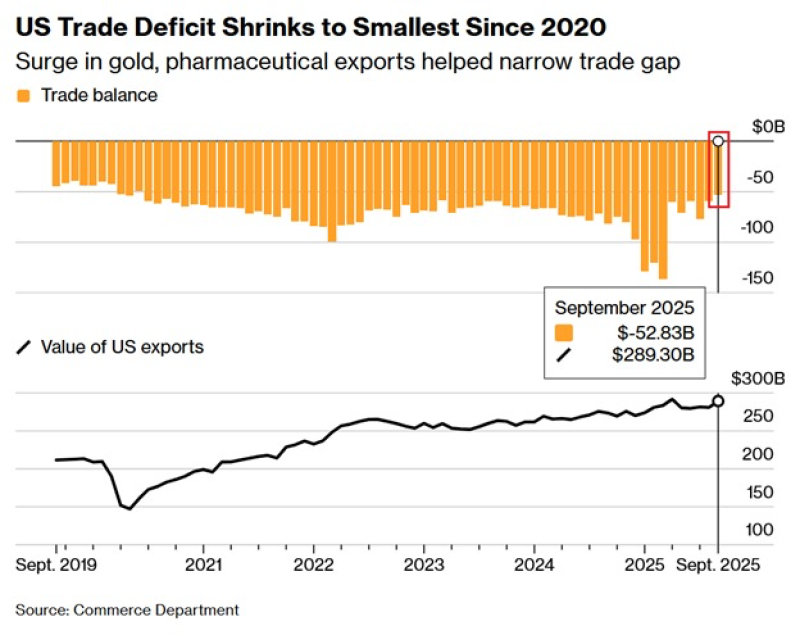
⬤ On the import side, purchases from overseas grew by $1.9 billion, or 0.6%, to $342.1 billion. While imports ticked up slightly, the real story was the export surge that drove the deficit down. Since March 2025, the goods trade deficit has improved by $83.6 billion, or 61%. When you factor in inflation, the merchandise trade deficit dropped to $79 billion in September—the lowest in nearly five years.
The uptick in exports is a key factor in this narrowing of the trade deficit.
⬤ The shrinking trade deficit points to a healthier US economy with growing export activity and better trade balance. The pharmaceutical sector's strong performance is particularly encouraging for the broader economy. Still, the steady rise in imports, though modest, might signal challenges in domestic production or increasing appetite for foreign goods.

⬤ The narrowing trade deficit reflects economic resilience, with export growth outpacing the moderate import increase. This trend could strengthen the US dollar and support the economic outlook heading into 2026, especially as high-margin industries like pharmaceuticals continue driving growth.
 Saad Ullah