Saad Ullah

⬤ Temporary help services employment in the U.S. dropped to around 2.45 million workers in December—the lowest we've seen since July 2020. What's more concerning? This marks the 38th straight month of year-over-year declines. Looking at historical patterns, similar drops in temp work preceded both the 2001 recession and the 2008 financial crisis, making this trend impossible to ignore.
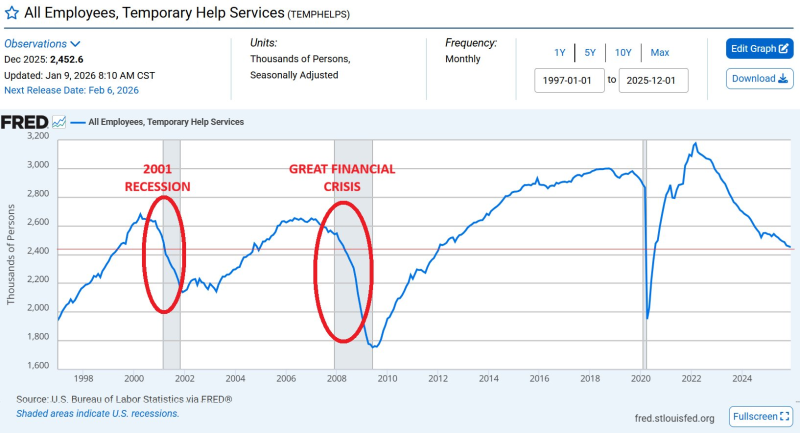
⬤ Here's why temp jobs matter so much: they're usually the first to go when companies start getting nervous about the economy. Businesses cut contract workers and staffing agency roles before they touch permanent employees, which makes this category a crystal-clear early warning system. We're not seeing a sudden crash here—it's been a steady, prolonged decline from post-pandemic highs. That tells us companies aren't reacting to short-term noise; they're playing it safe for the long haul.

⬤ The historical playbook is pretty clear on this one. Before the financial crisis hit in 2008, temporary employment started tanking well before the headline job numbers showed any real damage. The current 38-month losing streak follows that exact same script. Companies are clearly bracing for weaker demand or tighter conditions ahead. Sure, overall employment still looks relatively solid on paper, but this sustained contraction in flexible staffing reveals cracks beneath the surface that can't be ignored.
 Saad Ullah