Peter Smith
⬤ Germany's fiscal picture got a bit brighter in 2025, with the budget deficit tightening to 2.4% of GDP from 2.7% the year before. The improvement happened even as Berlin rolled out fresh debt packages meant to rev up the economy. The catch? Those stimulus measures haven't delivered much of a growth kick yet.
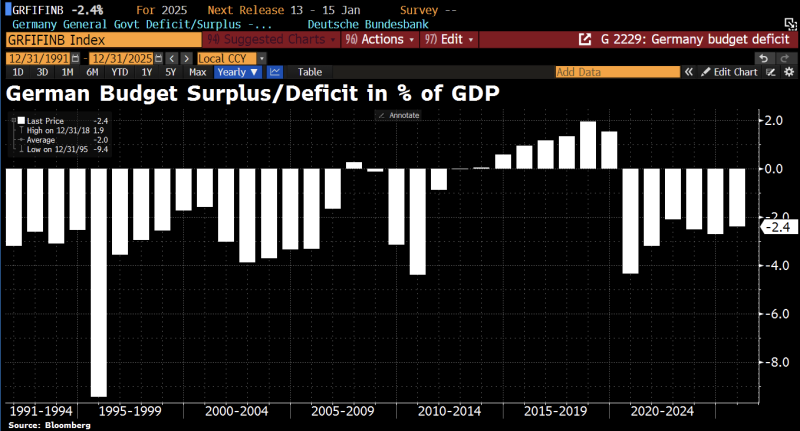
⬤ Looking at Germany's budget balance over three decades tells an interesting story. The country battled deep deficits in the mid-1990s and again during the 2008 financial meltdown. Then came the golden years—a string of surpluses through the mid-to-late 2010s when things were humming along. The pandemic changed everything in 2020, with emergency spending pushing the deficit sharply negative. Since then, Germany's been slowly clawing back, landing at 2.4% of GDP in 2025. That's still nowhere near those pre-COVID surplus days, but it's a decent recovery from the crisis depths.
⬤ The tighter deficit shows Berlin's getting a grip on spending while tax revenues hold steady. But here's the puzzle: better budget numbers haven't sparked stronger economic performance. Germany pumped money into investment and demand-boosting programs, yet the economy's barely responding. Either the fiscal push is running into structural roadblocks, or the effects are taking longer than expected to kick in.
⬤ Markets should pay attention because Germany anchors the entire eurozone economy. When deficit reduction doesn't produce growth, it raises questions about whether more fiscal spending would even work—and whether Germany has room to maneuver if things get worse. How Berlin threads the needle between keeping its books in order and supporting economic momentum will shape the eurozone's stability and growth prospects going forward.
 Peter Smith